Fabrication · Physical Computing · Interaction · Electronics
Handheld Snake Game
A handheld Snake game built from hand-soldered LED strips, physical controls, custom electronics, and a 3D-printed enclosure.
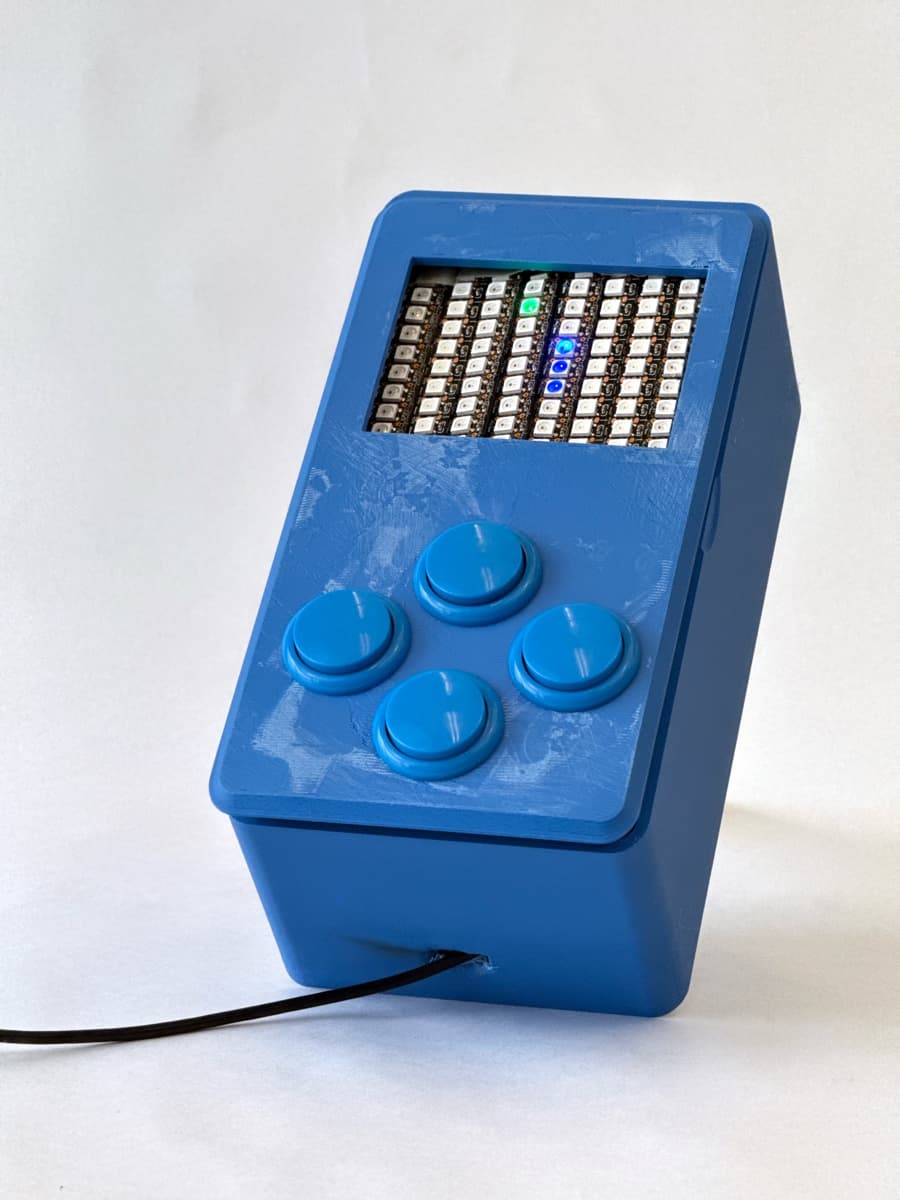
I built the console from the enclosure outward, combining a custom 3D-printed body, a hand-soldered LED display, physical controls, and a programmed Snake game into one working object.
How It Works
The class limited us to a small set of physical inputs and outputs, so I built the game from LEDs and buttons alone. Four directional buttons steer the snake. Each press changes its direction, the game logic on an Arduino Feather board updates its position, and the LED display shows the result.
- Button Input
- Game Logic
- LED Display
Designing the Enclosure
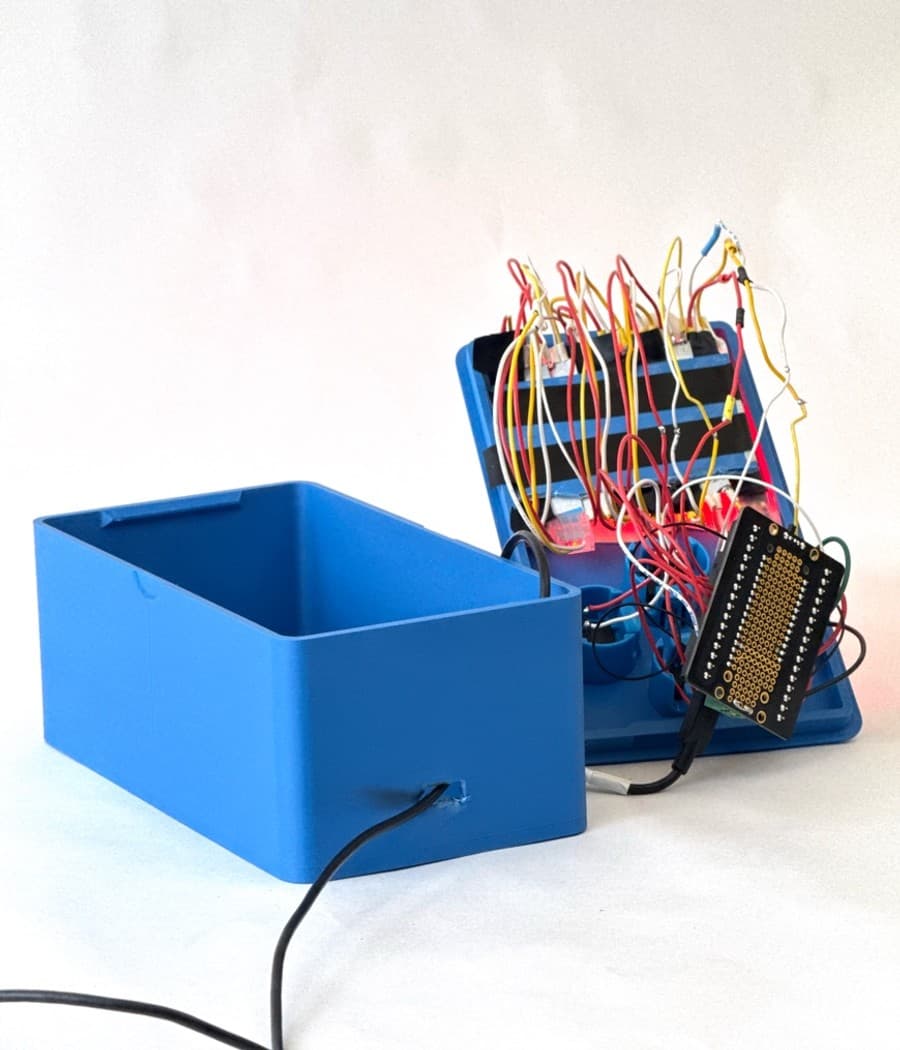
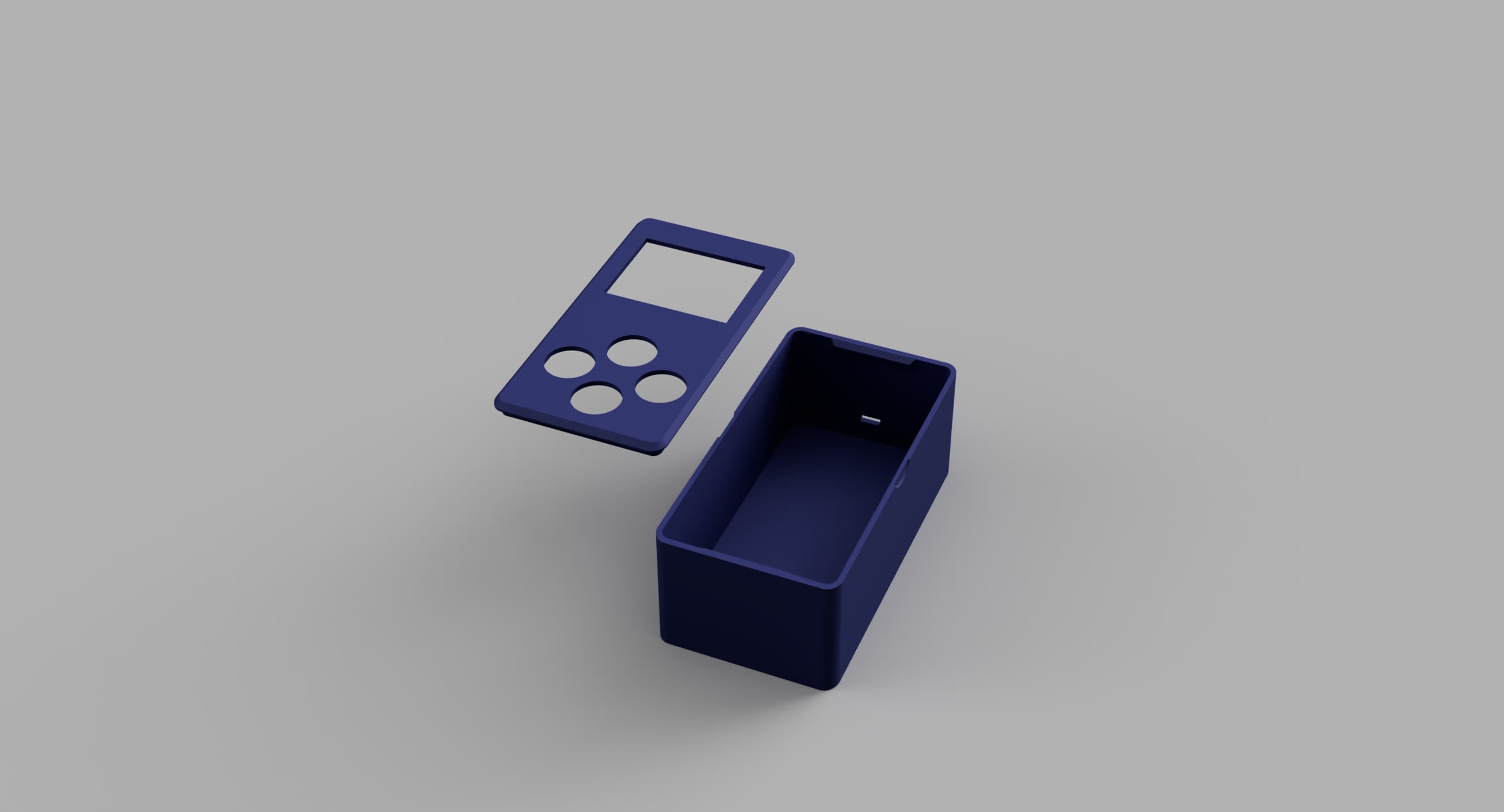
I designed the enclosure in Fusion 360 as two fitted parts: a faceplate for the LED display and directional controls, and a body deep enough to house the hand-wired electronics. After 3D printing the enclosure, I assembled and soldered the system inside.
Making an Uneven Grid Behave
Because of how the strips had to be wired and soldered together, one row ended up a single LED longer than the others, so the display wasn't a perfectly even grid. I compensated for that in the movement logic, adjusting how positions map to LEDs so the snake still travels in a straight horizontal line instead of shifting off course.
When the snake reaches the boundary, the game registers the collision and flashes the LED display red as feedback.